
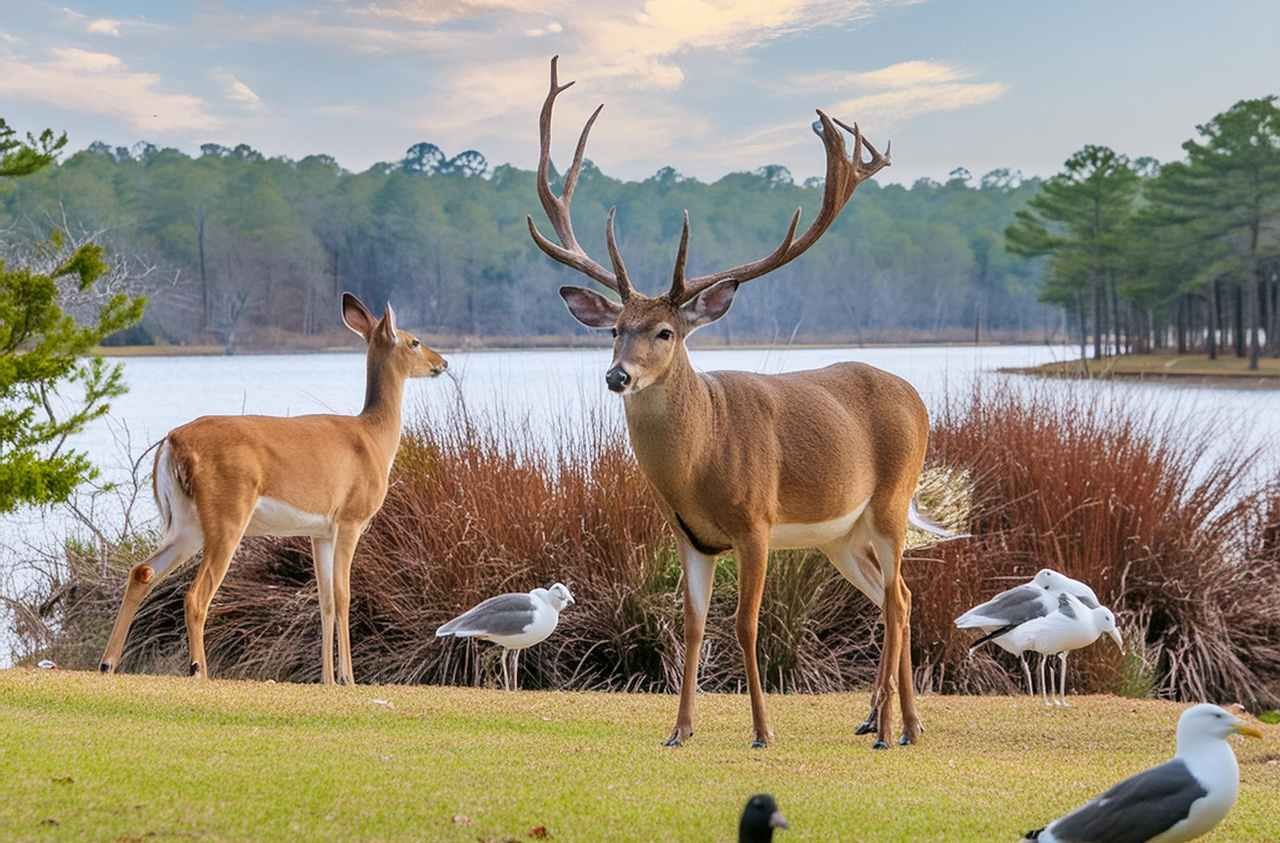
Alabama’s 2026-2027 hunting season is one of the South’s longest and most generous, with whitetail deer archery opening as early as October 1 in Zones D and E and the gun season stretching deep into February. The main game species include white-tailed deer, eastern wild turkey (both spring and fall), mourning doves, quail, rabbits, squirrels, and a full lineup of waterfowl like ducks and geese, plus feral swine and coyotes that can be hunted year-round.
Knowing your dates matters more than almost anything else — Alabama splits the state into five deer zones (A, B, C, D, and E) plus a Chronic Wasting Disease Management Zone (CMZ), and each one runs on its own calendar. You’ll need a valid hunting license before heading afield: residents can grab an all-game license for $34.35, while nonresidents pay $399.50 for an annual all-game license. Following regulations protects both the resource and your wallet — fines, confiscated game, and lost hunting privileges are steep prices for a missed detail like a missing harvest report or skipped blaze orange.
✔ Hunting season dates
✔ Bag limits
✔ Legal hunting hours
✔ Required licenses
✔ Weapon restrictions
✔ Blaze orange rules
✔ Public land rules
✔ Hunter education requirements
Quick Overview Table
| Species | Season | Weapon | Best Months | Permit Required |
|---|---|---|---|---|
| White-tailed Deer | Oct 1 – Feb 10 (varies by zone) | Archery, centerfire rifle, muzzleloader, air rifle, shotgun | Oct, Nov, Dec, Jan | All-game license + optional bait privilege; WMA license on WMAs |
| Eastern Wild Turkey | Fall: Nov 14–22 & Dec 12–27 (Zone 3); Spring: Mar 20 – May 3 | Shotgun (scattergun), archery | Mar, Apr, Nov, Dec | All-game license |
| Mourning Dove | Sept 5 – Jan 17 (split, by zone) | Shotgun (No. 7.5 or smaller shot in most cases) | Sept, Oct, Dec | Small-game license + HIP registration |
| Bobwhite Quail | Nov (first Sat) – Feb (last day) | Shotgun, .22 rimfire | Nov, Dec, Jan | Small-game license |
| Rabbit / Squirrel | Sept 12 – Feb 28 (2nd Sat in Sept) | Shotgun, .22 rimfire, archery | Sept, Oct, Nov, Dec | Small-game license |
| Ducks & Geese | Special teal: Sept 12–20; general: Nov 27–28 & Dec 5 – Jan 31 | Shotgun (3-shell plug, non-toxic shot) | Nov, Dec, Jan | All-game license + state & federal duck stamps + HIP |
| Woodcock | Dec 18 – Jan 31 | Shotgun (No. 7.5–9 shot) | Dec, Jan | Small-game license + HIP |
| Snipe | Nov 7 – Feb 21 | Shotgun (No. 7.5–9 shot) | Nov, Dec, Jan | Small-game license + HIP |
| Sandhill Crane | Nov 27 – Jan 3 & Jan 11–25 | Shotgun | Dec, Jan | Limited quota permit (draw) + HIP |
| American Alligator | Mid-Aug through early Sept (quota) | Various legal methods | Aug, Sept | Limited quota permit (draw) |
| Feral Swine | Year-round (no closed season) | Any legal firearm/archery, nighttime with special license | Any time | All-game license + nighttime license for night hunts |
| Coyote | Year-round (no closed season) | Any legal firearm/archery | Any time | All-game license + nighttime license for night hunts |
| Raccoon, Opossum, Bobcat, Fox | No closed season | Various | Any time | All-game license; fur-catcher license for selling pelts |
Key Hunting Dates for Alabama Hunting Season 2026-2027
Alabama organizes its hunting calendar around five deer zones plus the CWD Management Zone (CMZ). Zone boundaries are county-based, so pin down your county before you plan a trip.
Big Game
White-tailed Deer
- Zone A — Archery: Oct 15 – Feb 10 (either sex); Special Youth Gun: Nov 13–16; Special Muzzleloader & Air Rifle: Nov 16–20; Gun (stalk): Nov 21 – Feb 10.
- Zone B — Archery: Oct 15–24 (antlered only), Oct 25 – Feb 10 (either sex); Special Youth Gun: Nov 13–16; Special Muzzleloader & Air Rifle: Nov 16–20; Gun (stalk): Nov 21 – Feb 10.
- Zone C — Archery: Oct 15 – Feb 10 (either sex); Special Youth Gun: Nov 13–16; Special Muzzleloader & Air Rifle: Nov 16–20; Gun (stalk): Nov 21–29 (either sex), Nov 30 – Dec 11 (antlered only), Dec 12 – Jan 1 (either sex), Jan 2 – Feb 10 (antlered only).
- Zone D — Archery: Oct 1 – Jan 15 (either sex), Jan 16–27 (antlered only); Special Youth Gun: Oct 30 – Nov 2; Special Muzzleloader & Air Rifle: Nov 2–6; Gun: Nov 7–20 (antlered only), Nov 21–29 (either sex), then antlered-only segments into late January.
- Zone E — Archery: Oct 1 – Jan 15 (either sex); Special Youth Gun: Oct 30 – Nov 2; Special Muzzleloader & Air Rifle: Nov 2–6; Gun: Nov 7 – Jan 15 (either sex).
- CWD Management Zone (CMZ) — Archery: Oct 15 – Feb 10; Special Youth Gun: Nov 13–16; Special Muzzleloader & Air Rifle: Nov 16–20; Gun: Nov 21 – Feb 10.
- Notes: The antlered buck limit is three per hunter in all combined seasons, one per day, and at least one of those three must carry four antler points on one side (Barbour County has its own three-point rule). Dog deer hunting is prohibited statewide except on specific U.S. Forest Service lands in Calhoun, Clay, and Talladega counties where it’s by permit only.
Bear, Elk, Moose, Pronghorn, Bighorn Sheep, Mountain Goat, Bison, Javelina — No open season in Alabama. None of these species are huntable in the state. If you’re planning an out-of-state tag hunt, check neighboring states. For reference, nearby states with distinct seasons and rules include Georgia, Mississippi, and Tennessee, each with their own calendars and licensing systems.
Wild Hog (Feral Swine) — No closed season, day or night. Night hunting requires the special Nighttime Feral Swine & Coyote Hunting License. Hunting hogs over bait on private land requires the Bait Privilege License — no exemptions, all ages.
Turkey
Alabama divides turkey hunting into three zones, and the rules differ sharply between private land and WMAs.
- Zone 1 — Special Youth Hunt: Mar 13–14; Special Disabled Hunt: Mar 19; Spring Season: Mar 20 – May 3. Decoys allowed.
- Zone 2 — Special Youth Hunt: Mar 20–21; Special Disabled Hunt: Mar 26; Spring Season: Mar 27 – May 3. Decoys allowed.
- Zone 3 — Fall Season: Nov 14–22 and Dec 12–27 (no decoys in fall); Special Youth Hunt: Mar 13–14; Special Disabled Hunt: Mar 19; Spring Season: Mar 20 – May 3.
- Bag limit: One gobbler per day; four total gobblers across the combined fall and spring seasons. No more than two gobblers from any single WMA, CHA (Cooperative Hunting Area), or National Forest Ranger District.
- WMA note: WMA turkey seasons can differ significantly from the private-land dates above — always check the specific WMA permit map before you go.
Small Game
- Squirrel — Opens the second Saturday of September (Sept 12) and runs through the last day of February (Feb 28). Bag limit: 8 per day, 8 in possession.
- Rabbit — Same window as squirrel: Sept 12 – Feb 28. Bag limit: 8 per day, 8 in possession.
- Groundhog (Woodchuck) — No closed season, no bag limit.
- Nutria — No closed season, no bag limit.
Upland Birds
- Bobwhite Quail — First Saturday in November (Nov 7) through the last day of February (Feb 28). Bag limit: 8 per day, 8 in possession.
- Mourning & White-Winged Dove — Split seasons. North Zone: Sept 6 – Oct 18, Nov 21–29, Dec 12 – Jan 17. South Zone: Sept 13 – Oct 25, Nov 21–29, Dec 12 – Jan 17. Both zones open with a special Sept 5 hunt where legal. Bag limit: 15 per day.
- Woodcock — Dec 18 – Jan 31. Bag limit: 3 per day.
- Snipe — Nov 7 – Feb 21. Bag limit: 8 per day.
- Ruffed Grouse, Pheasant, Chukar, Partridge, Ptarmigan — No open season in Alabama.
Waterfowl
- Special Teal Season — Sept 12–20. 6 teal per day.
- Duck, Coot & Merganser — Nov 27–28 and Dec 5 – Jan 31. 6 ducks per day with species sub-limits (no more than 4 mallards, 2 of which may be female; 3 wood ducks; 2 black ducks; 2 redheads; 3 pintails; 2 canvasbacks; 1 scaup). Coots: 15 per day. Mergansers: 5 per day (only 2 hooded).
- All Geese — Sept 5 – Oct 4, Oct 17–31, Nov 27–28, Dec 5 – Jan 31. Dark geese (Canada, white-fronted, brant): 5 per day aggregate. Light geese (snow, blue, Ross’s): 5 per day aggregate.
- Youth, Active Military & Veterans Waterfowl Days — Nov 21, 2026 and Feb 6, 2027 (same rules as regular season).
- Rails, Gallinules — Sept 12–20 and Nov 27 – Jan 26. 15 per day.
- Sandhill Crane — Nov 27 – Jan 3 and Jan 11–25, limited quota permit by draw only (3 per permit).
Furbearers
- Raccoon & Opossum — No closed season; legal daytime and nighttime. No bag limit on private land; 5 per party on open permit public land.
- Bobcat — No closed season, no bag limit.
- Fox (gray & red) — No closed season, no bag limit.
- Coyote — No closed season, no bag limit; daytime and nighttime hunting (night requires the special license).
- Beaver — No closed season, no bag limit.
- Mink, Muskrat, Otter, Weasel, Badger — No open season under the general small-game regulations; check the current fur-catcher regulations if you trap.
Predators
- Coyote — Year-round, day and night. Electronic calls are legal for predators. A Nighttime Feral Swine & Coyote Hunting License is required after dark.
- Fox — Year-round, no closed season.
- Wolf / Mountain Lion — No open season and no protection conflicts: both are classified under the no-open-season rule, plus cougars hold no established population in the state.
Special Opportunities
- Youth Deer Hunts — Nov 13–16 statewide (Zones A, B, C, CMZ); Oct 30 – Nov 2 in Zones D & E.
- Youth Turkey Hunts — Mar 13–14 (Zones 1 & 3) and Mar 20–21 (Zone 2).
- Disabled Hunters — Special Disabled Turkey Hunt Mar 19 (Zones 1 & 3) and Mar 26 (Zone 2); disabled deer hunts vary by WMA.
- Youth/Military/Veterans Waterfowl Days — Nov 21, 2026 and Feb 6, 2027.
- WMA Bonus Buck — One bonus buck per hunter during designated bonus buck hunt dates on selected WMAs; doesn’t count toward the statewide three-buck limit.
Hunting License Fees
Alabama licenses run on an annual cycle expiring August 31. The table below shows the current fees; the resident all-game license is the most common starting point.
| License Type | Resident Fee | Nonresident Fee | Notes |
|---|---|---|---|
| All-Game Hunting License | $34.35 | $399.50 (annual) | Covers all species including deer and turkey |
| Small-Game Hunting License | $22.75 | $130.25 (annual) | All species except deer and turkey |
| 3-Day Trip License (All Game) | — | $173.90 | Short-term option for visitors |
| 10-Day Trip License (All Game) | — | $246.60 | Short-term option for visitors |
| 3-Day Trip (Small Game) | — | $57.40 | Short-term option for visitors |
| 10-Day Trip (Small Game) | — | $79.35 | Short-term option for visitors |
| Wildlife Management Area License | $22.75 | $22.75 | Required to hunt big game/waterfowl on WMAs; plus an AREA Permit (free) |
| Bait Privilege License | $18.45 | $63.40 | Required for deer/feral swine over bait; all ages, no exemptions |
| Nighttime Feral Swine & Coyote License | $18.00 | $61.65 | Required for night hunting of these species |
| Wildlife Heritage License | $13.95 | — | Special heritage license option |
| State Duck Stamp | $12.10 | $12.10 | Required for waterfowl hunting |
| Federal Duck Stamp | $30.00 | $30.00 | Required for waterfowl hunting; federal requirement |
| Fur Catchers License | $27.90 | Varies | Required to sell furs |
| Commercial Fowl Preserve License (7-day) | — | $10.00 | Preserve hunts |
| Physically Disabled Hunting License | $7.50 | — | Annual all-game |
| 50% Disabled Veteran License | $17.70 | — | Annual all-game |
| 100% Disabled Veteran License | $3.60 | — | Annual all-game |
Key notes: Hunters under 16 don’t need a hunting license, but they must still follow bag limits and Game Check. Residents 65 and older are exempt from the hunting license, WMA license, and state duck stamp (the federal stamp is still required for waterfowl). Residents turning 64 get a lifetime license with that year’s purchase. A Game Check H.E.L.P. number is free and required for harvest reporting — no exemptions. Nonresident college students (17–23) enrolled in approved Alabama institutions can buy resident-priced licenses ($34.35 all-game). Permits that cost extra on top of licenses: sandhill crane draw, alligator quota, WMA AREA permits (free but mandatory to carry), and special event licenses.
Important Hunting Regulations
- Legal firearms (deer gun season): Centerfire rifles with mushrooming ammunition; shotguns 10-gauge or smaller with buckshot, slugs, or single ball; muzzleloading long guns and handguns .40 caliber or larger; and air rifles (certain specs during special seasons). Fully automatic firearms are prohibited.
- Legal bows: Longbows, recurves, compounds, and crossbows. Vertical bows need at least 30 lbs. peak draw; crossbows need 85 lbs. at normal draw length.
- Broadheads: Must have at least two sharpened edges and a minimum cutting diameter of 7/8 inch.
- Crossbows: Legal for deer and most game during archery seasons when the hunter meets the equipment rules above.
- Air guns: Legal for deer in the Special Muzzleloader & Air Rifle season window; specifications are defined in the legal arms regulation.
- Suppressors: Legal to hunt with in Alabama, provided they’re legally owned per federal ATF rules and you carry the tax stamp paperwork.
- Magazine capacity: No general capacity limit on private land; some WMAs impose specific limits — read the WMA permit.
- Blaze orange: During gun deer, youth deer, and muzzleloader seasons, everyone afield must wear at least 144 square inches of hunter orange above the waist or a full-size orange hat. Exempt: turkey and migratory bird hunters, night hunters of foxes/raccoons/opossums, hunters in enclosed stands, and hunters elevated 12+ feet in a tree stand.
- Hunter education: Required for anyone born on or after August 1, 1977 to buy a license without supervision. Online course plus (for ages 15–17) a field day; students 18+ can complete online only.
- Sunday hunting: Legal on private land statewide; prohibited on most WMAs where Sunday closures apply. Check the specific WMA map before planning a Sunday trip.
- Night hunting: Allowed only for feral swine and coyotes with the Nighttime license, plus raccoons, opossums, foxes, and alligator under their seasons. Deer and turkey are strictly daylight-only.
- Electronic calls: Prohibited for turkey, dove, and waterfowl. Legal for predators (coyotes, foxes) during open seasons.
- Baiting: Legal for deer and feral swine on private/leased land only with the Bait Privilege License. Baiting is prohibited on all public lands (WMAs, national forests, TVA and Corps of Engineers land).
- Drones: Launching, landing, possessing, or using a drone is unlawful on WMAs and considered harassment of hunters elsewhere — leave the drone home.
- Dogs: Dog deer hunting is banned statewide except permitted U.S. Forest Service tracts in Calhoun, Clay, and Talladega counties. Dogs are legal for small game and waterfowl retrieval.
- Vehicles: No hunting from a moving motor vehicle; ATVs are for access only, not as shooting platforms.
- Road hunting: You may not hunt or discharge a centerfire rifle within 50 yards of the right-of-way of any public road, highway, or railroad.
- Dwelling distance: Hunting within 100 yards of any dwelling belonging to another person is unlawful.
- Public land rules: WMAs require the WMA license plus a free AREA Permit (paper or app) for hunters 16 and older; some WMAs have mandatory check-in/check-out and quota days.
- Private land permission: Written or verbal permission from the landowner is required; trespassing is a serious criminal offense in Alabama.
- Tree stands: Legal on most lands, but stands must often be removed at season’s end on public land and cannot damage trees.
- CWD restrictions: The CWD Management Zone (northwest Alabama) has carcass transportation restrictions — intact carcasses can’t leave the CMZ; use boned meat, quarters, or processed meat. Mandatory CWD sampling applies in parts of the zone.
- Carcass transportation: Outside the CMZ, follow standard salt/mineral regulations and never move high-risk parts like heads or spinal columns out of CWD zones.
- Tagging/checking: Deer and turkey must be reported through Game Check within 48 hours of harvest, using the Outdoor AL app, website, or phone. Recording the harvest immediately (before moving the animal) is required.
- Legal shooting hours: Resident game (deer, turkey, small game): 30 minutes before sunrise to 30 minutes after sunset. Migratory birds: one-half hour before sunrise to sunset (per species).
- Waterfowl ammunition: Non-toxic shot only (steel, bismuth, etc.) for all waterfowl and migratory birds; lead shot is banned in wetlands.
- Migratory bird requirements: HIP registration (free) plus state and federal duck stamps for waterfowl; possession of a plug limiting shotguns to three shells is required.
- Falconry: Legal under a state falconry permit with specific take rules.
- Concealed carry while hunting: Legal with a valid Alabama permit or recognized reciprocity; carrying a firearm while hunting also requires your hunting license.
- ATVs: Legal for access on most public lands; not for driving off designated roads on WMAs in some areas.
- Boats: Legal for accessing waterfowl hunting spots; non-toxic shot rules apply around water.
- Hunter harassment: Alabama law makes interfering with lawful hunting a crime — do not confront hunters or disturb game.
- Game Check: Mandatory for ALL deer and turkey harvests, regardless of hunter age or license status.
Best Hunting Places in Alabama
Best Deer Hunting Areas
Black Warrior WMA (91,263 acres) in Tuscaloosa and Walker counties anchors west-central Alabama’s deer hunting. Hardwood bottoms, planted pines, and food plots hold solid whitetail numbers. It’s public, accessible from multiple parking areas, mixed terrain that’s moderately challenging, and a perennial favorite for bowhunters.
James D. Martin-Skyline WMA (60,732 acres) in Jackson County offers steep mountain ridges and creek bottoms. Hunters love the deer density and the chance at mature bucks in rugged cover. Access is good via the WMA road system; difficulty runs moderate to high because of the terrain.
Barbour County WMAs are famous for big-bodied deer along the Chattahoochee River drainage. The antler restriction there (three points on one side) means bucks live longer — and grow bigger.
Best Turkey Hunting Areas
Talladega National Forest (Talladega, Cleburne, Coosa counties) is a spring turkey destination. Its oak ridges and creek drainages hold solid gobbler populations, and the open permit system means plenty of ground for self-guided hunters.
Oakmulgee WMA (44,500 acres) in Bibb, Hale, Perry, and Tuscaloosa counties mixes longleaf pine restoration with hardwood bottoms. Gobblers respond well here, and the WMA turkey dates are posted in the area permit.
Lauderdale WMA in the Shoals region produces both numbers and mature birds. It’s a smaller area, so weekday hunts beat weekends.
Best Waterfowl Hunting Areas
Wheeler National Wildlife Refuge near Decatur is the crown jewel for wintering waterfowl on the Tennessee River. Canada geese, mallards, and gadwall pile in by the thousands. Hunting requires a refuge permit; a new 335-acre waterfowl sanctuary opened there, so check the 2026-27 refuge regulations.
Eufaula National Wildlife Refuge on Lake Eufaula (Chattahoochee River) offers managed duck hunts plus deer and hog hunting. Waterfowl and youth gun hunts need written permits.
Mobile-Tensaw Delta & W.L. Holland WMA (51,040 acres) is the state’s largest coastal wetland complex. Teal, wood ducks, and mottled ducks work the tidal marshes; access is mostly by boat.
Best Small Game Areas
Geneva State Forest in the southeastern Wiregrass is a quail and rabbit hotspot. Open pine savannas make for pleasant dog work. Blue Spring WMA and Red Hills WMA are good public squirrel and rabbit options with lighter pressure.
Best Public Hunting Lands
National Forests in Alabama — Bankhead (northwest), Talladega, Conecuh, and Tuskegee — total more than 660,000 acres of open permit hunting. Deer, turkey, squirrel, and hog hunting are all available; free permits are often required.
Forever Wild Land Trust tracts — 245,000+ acres open to hunting through the WMA system — plus U.S. Army Corps of Engineers lands around lakes like Walter F. George, Guntersville, and Logan Martin.
Best Wildlife Management Areas
Alabama manages 35 WMAs covering nearly 750,000 acres. Standouts: Black Warrior (91,263 acres), James D. Martin-Skyline (60,732), Choccolocco (56,838), Mobile-Tensaw Delta (51,040), and Oakmulgee (44,500). Bigger isn’t always better — Crow Creek, Swan Creek, and Mallard Fox Creek are waterfowl-focused, while Choccolocco is a deer and hog powerhouse east of Birmingham.
Bag Limits
| Species | Daily Limit | Possession Limit | Special Notes |
|---|---|---|---|
| White-tailed Deer (antlered) | 1 | 3 per season | One buck must have 4+ points on one side |
| White-tailed Deer (unantlered) | 2 (Zones A, B, D, E, CMZ); 1 (Zone C) | Per season rules | Zone C: 1 doe max per day |
| Wild Turkey (gobblers only) | 1 | 4 per combined season | Max 2 per WMA/ranger district |
| Mourning Dove | 15 | 45 | HIP registration required |
| Bobwhite Quail | 8 | 8 | — |
| Rabbit | 8 | 8 | — |
| Squirrel | 8 | 8 | — |
| Woodcock | 3 | 3 | — |
| Snipe | 8 | 8 | — |
| Ducks (aggregate) | 6 | Varies | Species sub-limits apply |
| Coot | 15 | 30 | — |
| Merganser | 5 | 10 | Max 2 hooded |
| Dark Geese | 5 | 10 | Canada, white-fronted, brant |
| Light Geese | 5 | 10 | Snow, blue, Ross’s |
| Rails & Gallinules | 15 | 30 | — |
| Feral Swine | No limit | No limit | Night hunting by license only |
| Coyote | No limit | No limit | Year-round |
| Sandhill Crane | 3 per permit | 3 | Draw permit only |
Legal Hunting Hours
- General game animals (deer, turkey, small game): Daylight only — defined as 30 minutes before official sunrise to 30 minutes after official sunset.
- Migratory birds & waterfowl: One-half hour before sunrise to sunset (per federal frameworks).
- Night hunting: Only feral swine, coyotes (with the Nighttime license), raccoons, opossums, foxes, and alligators (during their quota seasons) may be hunted after dark.
- Exceptions: Turkey hunts on WMAs in spring often close at 1 p.m. (check the specific WMA); youth events may have adjusted hours.
Hunter Education Requirements
- Who needs it: Anyone born on or after August 1, 1977 must complete approved hunter education before buying a hunting license.
- Minimum age: You can take the online course at age 10.
- Online courses: Approved providers (like hunter-ed.com) offer the classroom portion online; costs around $29.
- Field day: Students 15–17 must complete a field day/skills session after the online portion; students 18+ can finish entirely online.
- Exemptions: Hunters born before Aug 1, 1977; hunters under 16 hunting under direct supervision of a licensed adult 21+; and holders of a H.E.L.P. number who are hunting under supervision.
- Supervision rules: Supervised hunters must stay within 30 feet and under voice control of a licensed adult 21 or older.
- Out-of-state cards: A valid hunter education card from any state is honored.
Public vs Private Land Hunting
Private land: You need the landowner’s permission (verbal is often accepted, written is better). Baiting is legal only here with the Bait Privilege License. No Sunday restrictions apply on private land.
Public land: WMAs require the WMA license ($22.75) plus a free AREA Permit (app or paper) for hunters 16+. Mandatory check-in/check-out applies on some areas. Sunday hunting is generally not allowed on WMAs.
National Forests: Open permit areas with their own rules; free permits required in some districts; no baiting; dog deer hunting only in the permitted Calhoun/Clay/Talladega tracts.
National Wildlife Refuges: Wheeler, Eufaula, and others offer deer, turkey, and waterfowl hunts under refuge-specific permits. Waterfowl hunts are typically drawn.
State Forests: Geneva State Forest and others allow small-game and big-game hunting under WMA-like rules.
Walk-in areas: Alabama’s open permit public lands function as walk-in opportunities — no quota or reservation on most, just the free permit.
Frequently Asked Questions
When does hunting season start in Alabama?
Archery deer season opens October 1 in Zones D & E and October 15 in Zones A, B, C, and the CMZ. Dove season opens September 5–6 with a special early window.
Do I need a hunting license?
Yes, unless you’re under 16 or a resident 65+. Residents pay $34.35 for all-game; nonresidents $399.50 annually.
Can nonresidents hunt in Alabama?
Yes. Choose an annual ($399.50), 10-day ($246.60), or 3-day ($173.90) all-game license.
Can I hunt on Sundays?
On private land, yes. On most WMAs, no — check the area permit.
Can I use a crossbow?
Yes, during archery seasons, with a minimum 85 lbs. draw weight.
Do I need hunter education?
Only if born on or after August 1, 1977. Online options exist; ages 15–17 add a field day.
Can I bait deer?
Only on private/leased land, and only with the Bait Privilege License. Public land baiting is banned.
Can I hunt on public land?
Yes — WMAs, national forests, refuges, and Corps land all offer opportunities with varying permits.
Can I hunt at night?
Only feral swine and coyotes (with the Nighttime license), raccoons, opossums, foxes, and alligators.
What’s the blaze orange rule?
144 square inches above the waist or a full orange hat during gun deer, muzzleloader, and youth deer seasons.
What is Game Check?
Mandatory harvest reporting for every deer and turkey — within 48 hours via app, website, or phone.
Is baiting legal on WMAs?
No — bait is prohibited on all public lands.
What’s the deer bag limit?
Three bucks per season (one per day) and two does per day in most zones.
Do I need a duck stamp?
Yes — both the state ($12.10) and federal ($30.00) stamps for waterfowl.
Can I hunt with a suppressor?
Yes, with legal federal ownership documentation.
Are electronic calls legal?
For predators, yes. For turkey, dove, and waterfowl, no.
Where can I hunt hogs?
Year-round anywhere, day or night with the right license.
What are the sanctions for not Game Checking?
Fines plus potential loss of hunting privileges; the harvest isn’t legal until reported.
Final Thoughts
Alabama offers some of the longest seasons and most generous bag limits in the Southeast, but that generosity comes with homework. Zone boundaries shift deer dates, WMAs run their own calendars, and harvest reporting is now non-negotiable. Treat every hunt as a chance to support conservation — license dollars fund the very habitat and game populations you pursue. Always confirm current regulations with the Alabama Wildlife and Freshwater Fisheries Division before heading out, since dates and rules can change between printings. And consider checking Georgia’s season dates or Mississippi’s season dates if you plan a multi-state trip. Hunt safe, hunt legal, and pass the tradition along.

- Important Virginia Hunting Dates and 2026-2027 Season Regulations - August 13, 2026
- Vermont Hunting: 2026-2027 Dates and Season Rules - August 13, 2026
- Prepare for Wyoming Hunting: 2026-2027 Season Dates and Regulations - August 13, 2026