
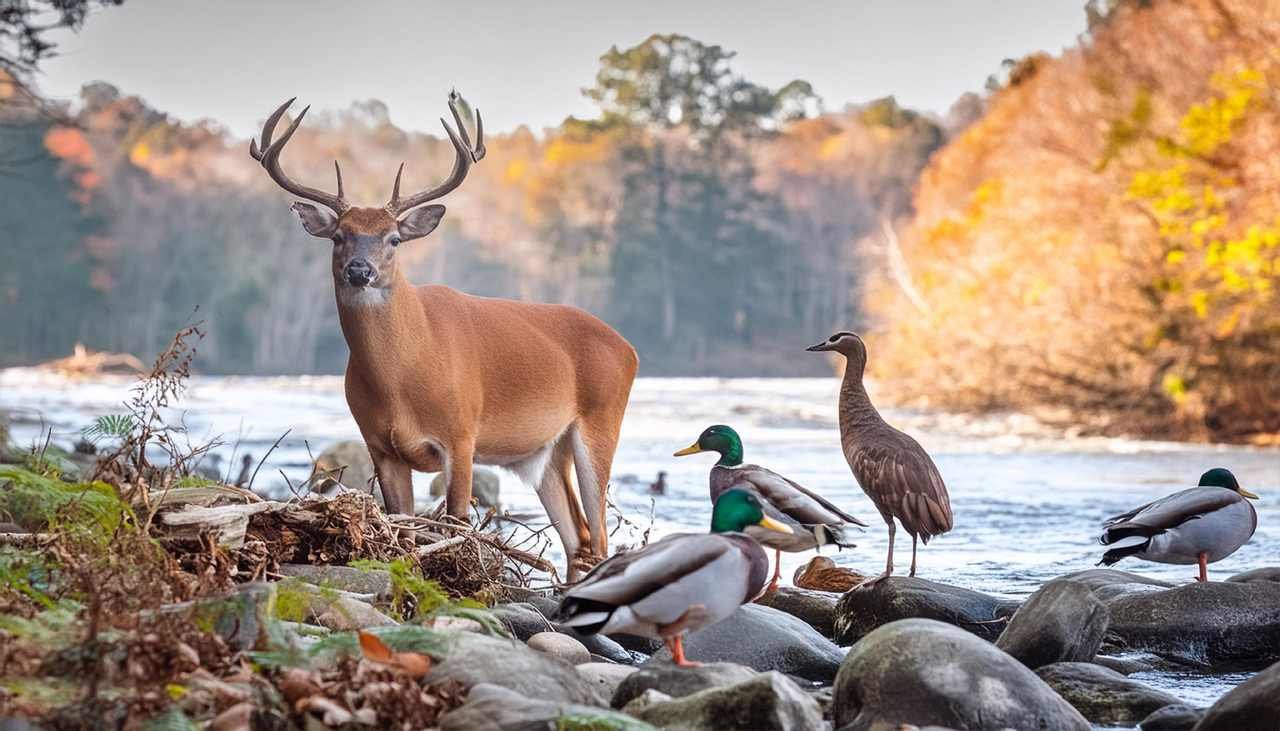
North Carolina’s 2026-2027 hunting season starts early for deer hunters in some Chronic Wasting Disease management counties with a special antlered-deer opener on August 22-23, 2026. For most hunters, the action ramps up in September with archery deer season, dove season, and September goose or teal opportunities. From there, the calendar moves into bear, turkey, waterfowl, squirrel, rabbit, quail, and other small-game seasons across a mix of private land, game lands, wetlands, forests, and agricultural country.
Knowing North Carolina hunting dates matters because the state uses zones, management units, species-specific limits, and public-land rules that can change how, when, and where you hunt. Licenses and privilege stamps are just as important as season dates, especially for big game, bear, and waterfowl. A legal setup also means following blaze orange rules, Sunday restrictions, CWD rules, and harvest reporting. For the most current official wording, always double-check the NC Wildlife regulations digest and NC Wildlife license types and fees page before you head afield.
✔ Hunting season dates
✔ Bag limits
✔ Legal hunting hours
✔ Required licenses
✔ Weapon restrictions
✔ Blaze orange rules
✔ Public land rules
✔ Hunter education requirements
Quick Overview
| Species | Season | Weapon | Best Months | Permit Required |
|---|---|---|---|---|
| Deer | Aug. special CWD opener; Sept.-Jan. by zone | Archery, blackpowder, gun | Oct.-Dec. | Hunting license + big game privilege |
| Bear | Oct.-Jan. by bear unit/zone | Archery/gun where legal | Oct.-Dec. | Big game privilege + Bear Management E-Stamp |
| Wild Turkey | Apr. 10-11 youth; Apr. 17-May 15 statewide spring | Shotgun, archery where lawful | April | Big game privilege |
| Waterfowl | Sept.-March depending on species/zone | Shotgun with legal ammo | Nov.-Jan. | Hunting license + HIP + state waterfowl + federal duck stamp |
| Small Game | Oct.-Feb. for many species | Rimfire/shotgun/archery where legal | Nov.-Jan. | Hunting license |
| Feral Swine | No closed season on private land; game lands vary | Day or night where legal | Year-round | Hunting license; public-land rules may add permit limits |
Complete Hunting Dates for North Carolina Hunting Season 2026-2027
Big Game
- Deer
- Special Early Season in CWD Management Areas: Aug. 22-23, 2026, antlered deer only, any lawful weapon.
- Youth Season: Sept. 26-27, 2026 statewide; Nov. 26-27, 2026 in the Western deer season.
- Urban Archery: Jan. 9-Feb. 14, 2027 in participating municipalities.
- Northeastern Zone: Archery Sept. 12-Oct. 2; blackpowder Oct. 3-16; gun Oct. 17-Jan. 1.
- Southeastern Zone: Archery Sept. 12-Oct. 2; blackpowder Oct. 3-16; gun Oct. 17-Jan. 1.
- Central Zone: Archery Sept. 12-Oct. 30; blackpowder Oct. 31-Nov. 13; gun Nov. 14-Jan. 1.
- Northwestern Zone: Archery Sept. 12-Nov. 6; blackpowder Nov. 7-20; gun Nov. 21-Jan. 1.
- Western Zone: Archery Sept. 12-Nov. 13; blackpowder Nov. 14-27; gun Nov. 28-Jan. 1.
- Notes: North Carolina deer season is heavily zone-based. CWD counties have added restrictions on baiting, scents, and carcass disposal.
- Bear
- Mountain Bear Management Unit: Oct. 3-Nov. 21, 2026, and Dec. 12, 2026-Jan. 1, 2027.
- Coastal Bear Management Unit Zone 1: Archery Sept. 12-Oct. 2; gun Oct. 16-Nov. 14 and Dec. 12-29.
- Coastal Bear Management Unit Zone 2: Archery Sept. 12-Oct. 2; gun Oct. 17-Nov. 14 and Dec. 12-29.
- Trapping: Oct. 1, 2026-Feb. 28, 2027 where lawful.
- Notes: No cubs under 75 pounds and no sow with cubs. Mandatory premolar tooth submission follows harvest.
- Wild Hog / Feral Swine
- Private land: No closed hunting season.
- Night hunting: Allowed with lights where legal.
- Game lands: Rules vary, and designated bear management areas have extra limits.
- Elk, Moose, Pronghorn, Bighorn Sheep, Mountain Goat, Bison, Javelina
- No open North Carolina hunting seasons.
Turkey
- Spring Youth Season: April 10-11, 2027.
- Spring Statewide Season: April 17-May 15, 2027.
- Fall Season: No statewide fall turkey season listed for 2026-2027.
- Special Seasons: Permit hunts on select game lands may apply.
- Notes: Male or bearded turkeys only.
Small Game
- Gray and Red Squirrel: Oct. 12, 2026-Feb. 28, 2027.
- Gray Squirrel Spring Season: May 17-31, 2027.
- Fox Squirrel: Oct. 12, 2026-Jan. 31, 2027.
- Rabbit: Oct. 12, 2026-Feb. 28, 2027.
- Groundhog / Woodchuck: No closed season on private lands.
- Coyote, skunk, nutria, armadillo, feral swine: No closed season on private lands.
Upland Birds
- Quail: Nov. 21, 2026-Feb. 28, 2027.
- Grouse: Oct. 12, 2026-Feb. 28, 2027.
- Pheasant: Sept. 5, 2026-Feb. 28, 2027 in much of the state; barrier-island season for male pheasants runs Nov. 21, 2026-Feb. 28, 2027.
- Chukar / Partridge / Ptarmigan: No general wild season; preserve hunts may apply.
Waterfowl
- Mourning and White-winged Dove: Sept. 5-Oct. 10; Nov. 7-28; Dec. 16-Jan. 30.
- Canada Goose: Sept. 1-30 statewide; resident population zone Oct. 15-24, Nov. 7-Dec. 5, Dec. 17-Feb. 6; northeast zone Dec. 28-Jan. 30.
- Light Geese: Nov. 7-March 10.
- September Teal: Sept. 10-19 east of U.S. 17 only.
- Inland Duck Zone: Oct. 15-17; Nov. 7-28; Dec. 18-Jan. 30.
- Coastal Duck Zone: Oct. 23-24; Nov. 7-28; Dec. 17-Jan. 30.
- Brant: Dec. 28-Jan. 30.
- Tundra Swan: Nov. 7-Jan. 30 by permit only.
- Woodcock: Dec. 10-Jan. 30.
- Common Snipe: Oct. 27-Feb. 27.
- Rails: Sept. 5-Nov. 25.
- Gallinules / Moorhens: Sept. 5-Nov. 25.
- Youth Waterfowl Days: Dec. 5, 2026 and Feb. 6, 2027.
- Veterans/Military Waterfowl Days: Dec. 5, 2026 and Feb. 6, 2027.
- Notes: No migratory bird hunting on Sundays.
Furbearers
- Raccoon and Opossum: Oct. 12, 2026-Feb. 28, 2027.
- Bobcat: Oct. 12, 2026-Feb. 28, 2027.
- Fox: Year-round with dogs only in some contexts; weapons seasons and county laws vary.
- Beaver: May be taken year-round with permission from the landowner or lessee.
- Mink, Muskrat, Otter, Weasel: Trapping seasons and methods apply; verify in the digest before trapping.
Predators
- Coyote: No closed season on private land; night hunting allowed in most counties.
- Fox: County-based restrictions apply.
- Wolf / Mountain Lion: No legal hunting season.
Special Opportunities
- Youth Deer Days
- Youth Turkey Season
- Youth Waterfowl Days
- Veterans/Military Waterfowl Days
- Disabled permit hunts
- Apprentice hunting through the Hunting Heritage Apprentice Permit
- Managed permit hunts for deer, bear, turkey, waterfowl, tundra swan, small game, and furbearers
Hunting License Fees
| License Type | Resident Fee | Nonresident Fee | Notes |
|---|---|---|---|
| State Hunting Annual | $32 | $124 | Base annual hunting license |
| State Hunting 10-Day | — | $99 | Nonresident only |
| Comprehensive Hunting | $49 | — | North Carolina’s all-in resident option; includes big game, game lands, waterfowl privilege, not federal duck stamp or bear e-stamp |
| Big Game Privilege | $18 | $124 | Needed for deer, bear, turkey |
| Big Game 10-Day | — | $99 | Nonresident short-term big game |
| Bear Management E-Stamp | $15 | $15 | Required for bear |
| Nonresident Bear Hunting License | — | $294 | Added to nonresident bear setup |
| State Waterfowl Hunting License | $18 | $18 | Required for waterfowl |
| Federal Duck Stamp | $29 | $29 | Required for waterfowl |
| Game Land License | $20 | $20 | Needed only in certain situations; most hunters with a valid hunting license already have game-land access |
| Falconry Hunting License | $32 | $32 | Separate falconry authorization |
| Controlled Hunting Preserve License | $28 | $28 | Preserve-specific |
| Lifetime Comprehensive Hunting | $326 | — | Resident lifetime option listed in current table |
| Hunting Heritage Apprentice Permit | Free | Free | Lets uncertified hunters hunt while accompanied |
| Youth under 16 | Exempt | Exempt | License-exempt, but big game report card rules still apply |
| Disabled / Senior / Sportsman-style options | Verify current portal | Verify current portal | Not fully listed in the standard 2026-2027 hunter fee table retrieved here |
Note: A $5 transaction fee may be added to license orders, and permit hunts usually carry a separate nonrefundable application fee.
Important Hunting Regulations
- Hunter education is required for first-time license buyers unless they use the apprentice permit.
- Crossbows are legal for all open species and must have at least a 100-pound draw.
- Longbows, recurves, compound bows, and crossbows are legal for open seasons.
- Fully automatic rifles are unlawful.
- Shotguns cannot be larger than 10 gauge.
- Blackpowder firearms must meet state muzzleloading definitions.
- The retrieved 2026-2027 general-regulation pages do not clearly spell out suppressor-specific rules, so verify before hunting with one.
- The same is true for air rifles and air bows; confirm current legality before use.
- Blaze orange is required for firearm hunting of deer, bear, squirrel, rabbit, quail, grouse, pheasant, and feral swine.
- During deer firearm seasons, even bowhunters on Sundays must wear visible hunter orange.
- Sunday firearm hunting is barred from 9:30 a.m. to 12:30 p.m.
- Sunday migratory bird hunting is prohibited.
- Archery hunting on Sundays is generally allowed where other rules do not block it.
- General hunting hours are 30 minutes before sunrise to 30 minutes after sunset.
- Migratory bird shooting hours are one-half hour before sunrise to sunset unless a species note says otherwise.
- Coyotes may be hunted at night in most counties.
- Night coyote hunting is not statewide; Beaufort, Dare, Hyde, Tyrrell, and Washington have extra permit and daylight limits.
- Raccoons, opossums, and feral swine may be taken at night where lawful.
- Electronic calls are legal for crows, coyotes, and feral swine.
- Wild birds cannot be hunted over bait.
- Turkey hunters must stay at least 300 yards away from bait until 10 days after it is gone.
- Bear bait rules are strict; processed foods and scent-type attractants are prohibited.
- Processed food bait is unlawful in any area with an established black bear season.
- On game lands, placing food of any kind for bear is unlawful.
- CWD management and surveillance areas restrict feeding, baiting windows, and natural deer-urine products.
- North Carolina now uses statewide deer carcass disposal rules for in-state cervid remains.
- Hunters must properly report deer, bear, and turkey harvests and keep the authorization number.
- Bear hunters must submit a premolar tooth by January 31 after the season.
- Private-land hunters still need landowner permission.
- Using motor vehicles, vessels under power or sail, aircraft, or drones to take wildlife is unlawful.
- Local laws may further restrict shooting from roads or possessing loaded firearms on rights-of-way.
- Deer-dog hunting is restricted by county and generally not allowed in the western part of the state.
- Game lands often add area-specific hunt-day schedules, permit quotas, and access limits.
- ATVs and unlicensed off-road vehicles are generally prohibited on game lands unless expressly allowed.
- Dog training seasons on game lands are restricted in spring and summer.
- Target shooting on game lands is limited to designated ranges or lawful settings.
- Intentionally interfering with lawful hunting is illegal under hunter-harassment law.
Best Hunting Places in North Carolina
Best Deer Hunting Areas
- Holly Shelter Game Land: Longleaf pine sandridges, pocosin, and swamp edges create classic coastal deer cover. Hunters like it for permit deer hunts and dog-hunt opportunities. Public access, flat to moderately tough walking, best for hunters comfortable with wet ground.
- Jordan Game Land: Bottomland hardwoods, mixed pine-hardwood timber, and open fields. Good for deer and general mixed-bag hunting. Public land with lake access points; moderate difficulty.
- Butner-Falls of the Neuse Game Land: Bottomland hardwoods, open fields, and impoundment country. Popular because it offers a lot of acreage close to the Triangle. Public land; terrain is easier than mountain tracts but pressure can be high.
Best Turkey Hunting Areas
- Croatan National Forest Game Land: Diverse habitat from longleaf pine ridges to cypress swamps. Hunters like the mix of open pine and edge habitat. Public access includes road and boat options; moderate difficulty.
- Jordan Game Land: Mixed hardwood and field structure supports spring gobbler hunting. Public access is straightforward, and the terrain is manageable.
- Roanoke River Wetlands: Big bottomland habitat with remote sections. Better for hunters who like quiet places and can handle boat access or long walks.
Best Waterfowl Hunting Areas
- Currituck Banks Game Land: Famous coastal marsh setup with managed blinds and permit structure. Great for ducks and geese. Access and hunt-day rules matter here, especially after Nov. 1.
- Goose Creek Game Land: Managed impoundments and Pamlico-country waterfowl habitat. Hunters like the traditional impoundment hunting. Public access, but hunt days and permits can control pressure.
- Butner-Falls of the Neuse: Walk-in impoundments make this a practical Piedmont duck option without needing a boat at every location.
Best Small Game Areas
- Johns River Game Land: Upland hardwood ridges and creek bottoms make it attractive for squirrel and mixed small game. Public land, rougher mountain walking, moderate to hard.
- Croatan National Forest: Wide habitat variety means squirrel, rabbit, and other legal small game opportunities across a large footprint.
- Roanoke River Wetlands: Good edge cover, swamp hardwoods, and field borders for rabbit and squirrel hunters who do not mind seasonal flooding.
Best Public Hunting Lands
- Croatan National Forest
- Holly Shelter Game Land
- Butner-Falls of the Neuse Game Land
- Jordan Game Land
- Roanoke River Wetlands Game Land
These are all public, but each has different permit systems, access routes, and game-land-specific restrictions.
Best Wildlife Management Areas
North Carolina uses the term game lands more often than WMA, but the idea is similar. The standouts for many hunters are Holly Shelter for coastal big game, Currituck Banks and Goose Creek for waterfowl, Butner-Falls for mixed public opportunity, and Johns River for mountain small game and public-water access.
Bag Limits
| Species | Daily Limit | Possession Limit | Special Notes |
|---|---|---|---|
| Deer | No daily limit | 6 season/possession total | Max 2 antlered, 4 antlerless; bonus urban antlerless cards available |
| Wild Turkey | 1 | 2 season/possession | Only one may be taken during youth season |
| Gray/Red Squirrel | 8 | No possession limit | Spring gray squirrel season also open |
| Fox Squirrel | 1 | 2 | Season limit 10 |
| Rabbit | 5 | No possession limit | Box-trapping allowed with hunting license |
| Quail | 6 | 12 | No season limit listed |
| Grouse | 3 | 6 | Season limit 30 |
| Pheasant (barrier islands) | 3 | 6 | Season limit 30 |
| Raccoon | 3 | No possession limit | No season limit |
| Opossum | No limit | No limit | — |
| Bobcat | No limit | No limit | — |
| Dove | 15 | 45 | Mourning + white-winged combined |
| Ducks | 6 | 18 | Species sublimits apply |
| Canada Goose | 15 Sept.; 5 resident zone; 2 northeast zone | 3x daily unless noted | Zone-based |
| Light Geese | 25 | No possession limit | Expanded methods allowed after Feb. 6 |
| Brant | 1 | 3 | — |
| Tundra Swan | — | 1 per season | Permit only |
| Woodcock | 3 | 9 | — |
| Common Snipe | 8 | 24 | — |
| Rails (King/Clapper) | 15 | 45 | — |
| Rails (Sora/Virginia) | 25 | 75 | — |
Legal Hunting Hours
North Carolina’s default rule for game animals and upland birds is simple: legal hunting hours are 30 minutes before sunrise until 30 minutes after sunset. That covers most deer, bear, turkey, and small-game hunting unless a special rule says otherwise.
For big game, stay alert to Sunday rules. Firearm hunting is prohibited from 9:30 a.m. to 12:30 p.m. on Sundays, and local land rules can add more limits.
For turkey, the safest approach is to follow the general daytime rule and keep a close eye on any game-land or permit-hunt exceptions.
For waterfowl and other migratory birds, shooting hours run one-half hour before sunrise until sunset. North Carolina does not allow migratory bird hunting on Sundays.
For night hunting, only certain species qualify, including raccoon, opossum, feral swine, and coyotes in most counties. County exceptions apply, so always check the local section before spotlighting predators.
Hunter Education Requirements
North Carolina requires hunter education for hunters who have not previously qualified to buy a license. If you have not completed hunter education, you can still hunt under the Hunting Heritage Apprentice Permit, but you must be accompanied by a properly licensed adult who remains within sight and hearing distance.
There is no minimum age to take the course, although classes are taught at about a sixth-grade level. North Carolina offers free instructor-led courses statewide, and several approved online options are available. For many hunters, the online course is the fastest route because it allows you to print a temporary card and then buy a license.
Youth under 16 are license-exempt, but if they hunt deer, bear, or turkey, they still need the proper harvest report card and must follow hunter education supervision rules.
Public vs Private Land Hunting
Private land in North Carolina requires permission. Open seasons do not give hunters an automatic right to enter posted or unposted private property, so always secure landowner approval first.
Public hunting mostly happens on game lands, national forest ground, refuges, and some permit areas. Game lands can be excellent, but they also come with extra rules on roads, camping, dogs, Sunday firearm use, impoundment hunt days, and permit-only zones. Waterfowl impoundments often operate on special schedules such as Tuesdays, Saturdays, holidays, and opening or closing days.
National forests like Croatan can give hunters big-acreage access, while refuges and permit areas may use drawings or area-specific maps. If you like public ground in the region, you may also want to compare nearby options in this Virginia hunting season guide.
Frequently Asked Questions
When does hunting season start in North Carolina?
For 2026-2027, the earliest major deer opener is the special antlered-deer season on Aug. 22-23 in CWD management counties. Broader fall hunting begins in September.
Do I need a hunting license in North Carolina?
Yes, unless you qualify for a youth or other legal exemption. Big game and waterfowl hunters usually need extra privileges or stamps too.
Can nonresidents hunt in North Carolina?
Yes. Nonresidents can buy annual or 10-day licenses, plus any required big game, bear, or waterfowl privileges.
Can I hunt on Sundays in North Carolina?
Yes, but with limits. Firearm hunting is prohibited from 9:30 a.m. to 12:30 p.m., and migratory bird hunting is not allowed on Sundays.
Can I use a crossbow during deer season?
Yes. Crossbows are legal for open seasons and must have at least a 100-pound draw weight.
Do I need hunter education in North Carolina?
Most first-time hunters do, unless they hunt under the free apprentice permit with the required adult supervision.
Can I bait deer in North Carolina?
Sometimes. Deer baiting rules change in CWD management and surveillance areas, and bait rules are stricter where bear seasons apply.
Can I hunt at night in North Carolina?
Only certain species, such as raccoon, opossum, feral swine, and coyotes in most counties, may be hunted at night.
What is the blaze orange requirement?
During firearm seasons for deer and several small-game species, hunter orange visible from all sides is required.
Final Thoughts
North Carolina hunting season 2026-2027 gives hunters a long menu of choices, from early deer and coastal bear hunts to spring gobblers, impoundment ducks, and classic squirrel-and-rabbit days. The big keys are knowing your zone, carrying the right license and privileges, and understanding how public-land rules can differ from private-land rules.
The best North Carolina hunters are the ones who stay safe, respect landowners, report harvests correctly, and support conservation through ethical hunting. Before any trip, especially for deer in CWD areas, bear, waterfowl, or permit hunts, confirm the latest details with the North Carolina Wildlife Resources Commission so your hunt is both legal and responsible.

- Important Virginia Hunting Dates and 2026-2027 Season Regulations - August 13, 2026
- Vermont Hunting: 2026-2027 Dates and Season Rules - August 13, 2026
- Prepare for Wyoming Hunting: 2026-2027 Season Dates and Regulations - August 13, 2026