
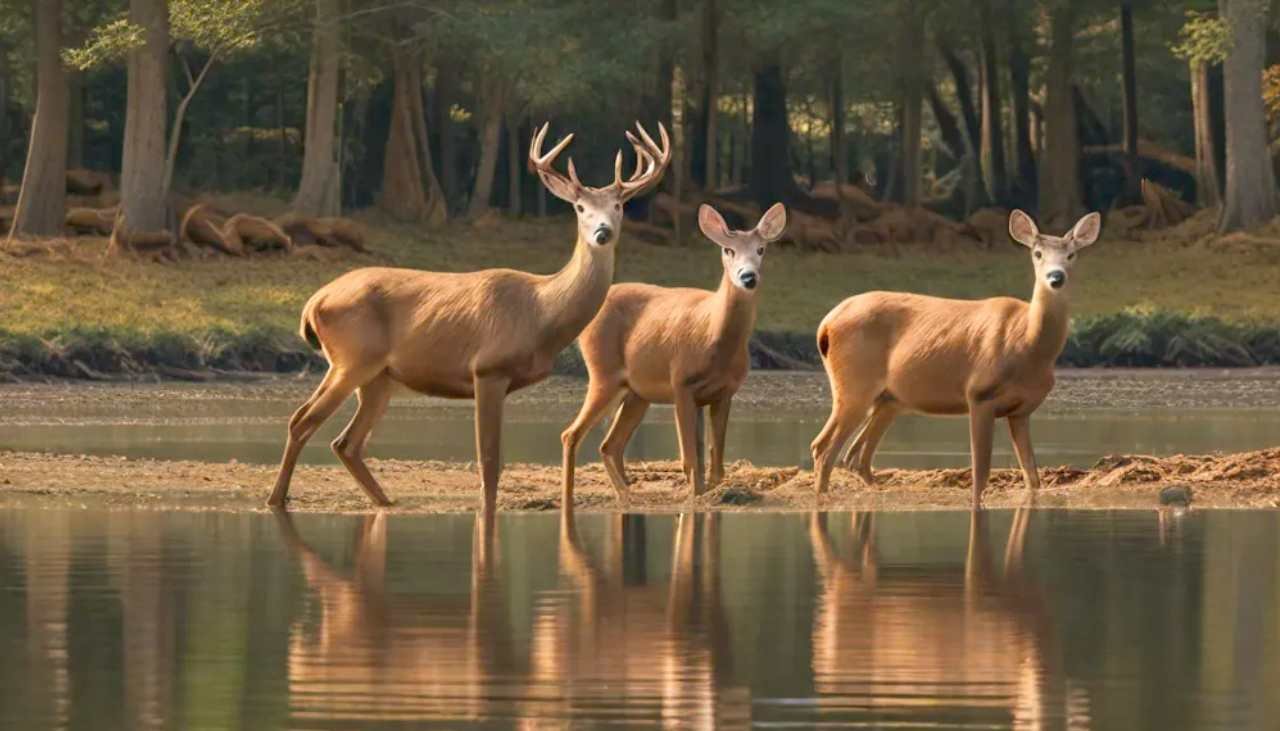
Hunting season in Georgia kicks off in early fall and runs straight through spring, giving sportsmen a long window to pursue deer, turkey, alligators, waterfowl, and small game on public Wildlife Management Areas (WMAs) and private lands across the state. Whether you’re chasing whitetails in the North Georgia mountains, working a flooded timber for wood ducks, or stalking Eastern turkeys in the Piney Woods, knowing the exact dates, bag limits, and license requirements keeps you legal and in the field longer.
Understanding Georgia’s hunting regulations matters because season dates often shift season-to-season, counties carry antler restrictions or extra permits, and WMA rules layer on top of statewide rules. Buying the right license before you head out protects you from fines, helps fund conservation through Georgia DNR’s Wildlife Resources Division, and keeps the state’s deer, turkey, and waterfowl populations healthy for the next generation.
✔ Hunting season dates (Northern & Southern deer zones)
✔ Bag limits and possession caps
✔ Legal hunting hours
✔ Required hunting licenses and permits
✔ Weapon restrictions
✔ Blaze orange requirements
✔ Public land (WMA) rules
✔ Hunter education requirements
Quick Overview Table
| Species | Season | Weapon | Best Months | Permit Required |
|---|---|---|---|---|
| Deer (Northern Zone) | Sept 12 – Jan 11 (archery/firearm/muzzleloader split) | Archery, firearm, muzzleloader | Oct–Dec | Resident/Nonresident license; Zone-specific antler rules |
| Deer (Southern Zone) | Aug 15 – Jan 11 (extended archery) + main firearm window Oct 17 – Jan 11 | All legal methods | Oct–Dec | Resident/Nonresident license |
| Turkey (Spring Gobbler) | Late March – mid-May (4 segments) | Shotgun, archery | April | Special gobbler permit, landowner authorization needed on private land 4/1–4/15 |
| Turkey (Fall) | Limited WMAs only, varies | All legal methods | Sept–Oct | License + WMA permit (quota hunts) |
| Waterfowl (Ducks) | Mid-Nov through late Jan (federal framework) | Shotgun (non-toxic shot required) | Nov–Jan | HIP registration, Federal Duck Stamp, Georgia Migratory Bird permit |
| Small Game | Sept – Feb (varies by species) | .22 rimfire, shotgun, archery | Oct–Jan | Basic hunting license |
| Furbearers | Year-round (trapping season Oct–Feb) | Firearm, traps, cable restraints | Nov–Feb | License + $25 furharvester permit (if selling pelts) |
| Alligator | Mid-Aug – early Oct by quota | Hand-held, bow & arrow, snare | Aug–Sept | Mandatory quota-only permit |
Complete Hunting Dates for Georgia Hunting Season 2026–2027
Big Game
Deer (Northern Zone – Cherokee, Clayton, Cobb, Dawson, DeKalb, Forsyth, Fulton, Gwinnett, Habersham, Hall, Lumpkin, Paulding, Pickens, Rabun, Stephens, Towns, Union, White, and Banks counties plus the rest of the North Georgia mountain counties north of I-20)
- Archery: Opens the second Saturday in September (Sept 12, 2026) and runs through January 11, 2027. Either-sex in most counties; check the county-specific antler restriction map on Georgia DNR’s site.
- Firearms: Opens the second Saturday in October (Oct 10, 2026) and runs through January 11, 2027. Two-up rule statewide — you may harvest two antlered bucks per season.
- Muzzleloader: Typically runs for two weeks at the close of the season (early January) — verify exact start before hunting.
- Youth/Family Hunt: A special late-September weekend is designated on most WMAs and on private land by county regulation.
- Antler Restriction: In select Piedmont counties, bucks must have a minimum of 4 points (1 inch or longer) on one side OR a 15-inch outside spread.
Deer (Southern Zone – the rest of the state south of the Northern Zone line)
- Archery: Aug 15, 2026 – Jan 11, 2027 (either-sex statewide).
- Firearms: Oct 17, 2026 – Jan 11, 2027.
- Muzzleloader: Late-season window in early January, two-week window.
- Antler Restriction: Does not apply in most Southern counties; check the county list each year.
Elk / Moose / Pronghorn / Bighorn Sheep / Mountain Goat / Bison – These species have no established hunting season in Georgia; populations are not present in huntable numbers.
Bear – A limited special-opportunity bear season exists in select North Georgia counties (a small quota hunt in late October–November). Most hunters encounter bear hunting through dedicated WMAs by lottery permit. Bag limit is restricted; hunters must apply through Georgia DNR’s quota hunt system.
Wild Hog – No closed season on private land with landowner permission. On WMAs, hogs may only be taken during the open deer or small game seasons using legal methods for that hunt. No bag limit.
Turkey
- Spring Gobbler: Runs in four segments from late March into mid-May. Statewide season typically opens around March 21–28 and closes around May 15. Daily bag is one gobbler with three-bird annual cap.
- Youth Spring Gobbler: A dedicated youth weekend runs the weekend before regular opening weekend — hunters 16 and under with a supervising adult allowed.
- Fall Turkey: A fall turkey season exists on a limited number of WMAs (quota hunts only). No fall season on private land; hunters must check the WMA-specific publication each year.
Small Game
- Squirrel (Gray & Fox): Opens middle of August (statewide) and runs through late February — long one of Georgia’s most popular small-game pursuits.
- Rabbit (Cottontail): Mid-November through late February; check the county/year map for specific openings.
- Hare: No established season for jackrabbit or snowshoe hare in Georgia.
- Groundhog / Woodchuck: Year-round legal harvest; no bag limit; rifle or rimfire use permitted on private land per local ordinances.
- Prairie Dog: Not native to Georgia; consult local ordinances before discharging firearms on private property.
Upland Birds
- Quail (Bobwhite): Mid-November through late February — WMAs (River Bend, Cohutta, Dukes, DiLane) carry the best public populations.
- Pheasant (Ring-necked): Season runs mid-November through mid-February but wild populations are limited; most birds are released on licensed hunting preserves.
- Ruffed Grouse: North Georgia mountains only; season is mid-October through late February on specific WMAs.
- Chukar & Hungarian Partridge: Limited to licensed preserves; not present in huntable wild Georgia populations.
- Ptarmigan: Not native to Georgia — no season.
Waterfowl (Federal framework sets season, Georgia DNR sets specifics)
- Ducks: Opens mid-November and runs 60+ days split into two segments. Daily bag: 6 ducks total, with species-specific caps (e.g., mallard, wood duck, scaup).
- Geese: Canada goose season opens in early September (Early Resident Canada Goose) and South Zone resident Canada goose runs late through February.
- Snow & Ross’s Geese: Light goose conservation order is mid-February through March — high bag limits.
- Brant: Coastal Georgia — limited season; verify the specific Atlantic Flyway framework.
- Scaup: 60-day cap; typically only allowed in the second duck segment nationwide.
- Teal (Blue-winged): 9-day special September teal season — federal framework only.
- Coot & Gallinules: In-state seasons with daily bag of 15 coots; common gallinule and purple gallinule crow together with separate cap.
- Rails: King, clapper, Virginia, and sora — separate daily bag and possession limits.
- Snipe (Wilson’s): Opens mid-November; daily bag of 8.
- Woodcock: Mid-November through January — check the federal framework for split dates.
Furbearers
- Bobcat, Coyote, Fox, Raccoon, Skunk, Opossum, Mink, Otter, Beaver, Muskrat & Weasel: Raccoon & opossum = year-round; bobcat & otter = October through mid-February; fox, coyote & most others = year-round. Trapping season generally opens mid-November and runs through mid-February with cable restrainer requirements on select waters.
- A furharvester permit ($25) is required for anyone selling skins or hides.
Alligator
- A single-segment quota hunt runs mid-August through early October in the South Zone (roughly the Altamaha drainage and south). Mandatory quota-application permit required from Georgia DNR (typically awarded by lottery).
Predators
- Coyote / Fox: Legal year-round; no bag limit; daytime or nighttime (with landowner permission and using a light that does not project across property lines).
- Bobcat: October through mid-February.
Special Opportunities
- Youth Hunts: Designed weekend slots in September (deer) and late March (turkey); hunter must be under 16 with adult supervision.
- Veterans & Disabled Hunters: Mobility-impaired hunters gain access to select blinds and elevated stands on WMAs by permit through the Sportsmen’s License Fund program.
- Apprentice Licenses: Available to first-time adult hunters apprentice-style without hunter education completion; requires a licensed adult mentor.
- Mentored / Family Hunts: Special openings on WMAs — check individual area brochures.
- Military Hunts: Several WMAs offer special military appreciation hunts; check the quota hunt booklet.
Hunting License Fees (2026–2027 Georgia License Year)
| License Type | Resident Fee | Nonresident Fee | Notes |
|---|---|---|---|
| Resident Hunting License | $15 | — | Required base license for residents 16+ |
| Nonresident Hunting License | — | $100 | 3-day, 7-day, annual options available |
| Nonresident 3-Day Trip License | — | $25 | Short-term nonresident option |
| Resident Sportsman’s License | $65 (under 60) / $25 (60+) | — | Includes hunting + fishing + 50 free state park days |
| Nonresident Sportsman’s License | — | $170 | Annual nonresident combo |
| Youth License (under 16) | Free | Free | Must have adult supervision |
| Senior Lifetime License (resident 60+) | $9 (fishing) / $15 (hunting) | — | One-time fee |
| Apprentice Hunting License | $15 resident / $100 nonresident | See state | No hunter education required |
| Georgia Migratory Bird Permit | $5 | $5 | Required for ducks/geese/doves |
| HIP (Harvest Information Program) | Free | Free | Required to hunt migratory birds |
| Federal Duck Stamp | $30 | $30 | Required at age 16+ for waterfowl |
| Furharvester Permit | $25 | $25 | Required to sell hides/pelts |
| Alligator Hide Tag | $5 – $10 per tag | Same | Required at quota hunts |
| Quota Hunt Permit | $4 application fee (paid even if not drawn) | $4 | Lottery application fee |
Permits that require additional fees: Antlerless deer permits (often free but limited per county), managed-dog deer-hunt permit, primitive weapons/muzzleloader permit, plus WMA-specific quota permits as published in WMA brochures.
Important Hunting Regulations
- Legal firearms: Centerfire and rimfire rifles (.22 and up) are legal for many small game and alligators; shotguns are required for turkey and most waterfowl.
- Legal bows: Longbows, recurves, and compound bows of at least 40-lb draw weight for deer/bear; check the turkey minimum weight for special archery-only seasons.
- Crossbows: Legal to use during any open season for the species being hunted in Georgia — no minimum draw weight above standard crossbow specs.
- Air guns: .30 caliber or larger air rifles legal for deer hunting under specific regulations.
- Suppressors: Allowed for hunting per federal and Georgia law — still must register through ATF NFA process.
- Blaze orange: 500 square inches of solid blaze orange worn visibly (hat and/or vest) by hunters during any firearms deer season on WMAs and on private lands (private-land exception optional in counties that opt out — verify Georgia DNR’s county list annually).
- Hunter education: Mandatory for any hunter born after Jan 1, 1961; proof via Hunter Ed card required for license purchase unless holding an apprentice license.
- Sunday hunting: Legal on private land statewide; prohibited on most WMAs and public lands with a few special permit exceptions.
- Night hunting: Raccoon and opossum use dogs and lights; coyote and fox may be taken at night on private land (no light may shine across a property line).
- Electronic calls: Legal for most species EXCEPT turkeys — electronic turkey calls are illegal.
- Baiting: Baiting for deer is restricted in counties with Chronic Wasting Disease-watch status (none confirmed in Georgia today, but bait piles outside the normal hunting area may violate baiting laws if the area is baited for deer 14 days prior to hunting).
- Drones: Drone use to spot or drive wildlife is illegal during an active hunt.
- Dogs: Allowed for small game, raccoon, fox, deer (Parts of Georgia allow managed deer-dog hunts by permit), and bear (specific WMAs).
- Vehicles/road hunting: Spotlighting and shooting from a vehicle or any public road right-of-way is illegal.
- Tree stands: Permanent tree stands on WMA require a permit (free but registered); portable stands are allowed without registration.
- Tagging: Deer and turkey must be reported through Georgia’s Game Check system within 24 hours of harvest (online or phone). A paper tag must remain on the carcass until processed.
- CWD status: Georgia currently remains a CWD-free state; no out-of-state carcass import restrictions on boned-out meat at this time — verify annually before transporting trophies from out-of-state.
- Waterfowl ammunition: Nontoxic shot only — No. 2 steel through BBB tungsten sizes.
- Falconry: A Georgia Falconry Permit (with sponsor) is required; season is generally concurrent with open small-game seasons.
- Concealed carry: Permit required to carry while hunting; Georgia DNR does not automatically exempt hunting hours.
- Boats & ATVs: ATV use is restricted on most WMAs (only on designated trails or for licensed mobility-impaired hunters) — verify each WMA brochure before launching.
- Hunter harassment law: It is illegal to knowingly interfere with a lawful hunt.
- State-specific rule to know: Two-up buck rule — limit is two antlered bucks per hunter per season, statewide.
Best Hunting Places in Georgia
Best Deer Hunting Areas
Farm Belt of Southwest Georgia (Dooly, Worth, Mitchell, Colquitt counties) — Crop fields mixed with hardwood drainages push mature bucks into narrow funnel timber between cotton and peanut plots. Public access is limited (mostly private), but leasing a hunting club here offers trophy potential.
Oconee National Forest & Surrounding Piedmont Tracts (Greene, Hancock, Putnam, Morgan counties) — Mixed oak/pine ridge habitat produces plenty of both-sex opportunities; access is largely free via USFS roads in the Oconee National Forest or via Georgia’s Wildlife Management Areas (Hard Labor Creek, Oconee WMA). Expect pressure on opening weekends but excellent November rut hunts.
Coastal River Swamps (Appling, Jeff Davis, Coffee counties) — Bottomland hardwoods along the Ocmulgee and Satilla produce trophy bucks that hide in thick canebreaks.
Best Turkey Hunting Areas
West Central Georgia (Troup, Harris, Meriwether, Upson counties) — Piney Woods mixed with hardwood creek-bottoms. Long-known fall-shower roosts and an active gobbler population in early April.
Lower Coastal Plain (Ware, Clinch, Coffee counties) — Large tracts of private timberland hold a strong Eastern turkey population — best to pair with a guide for first-time hunters.
Cohutta & Chattahoochee National Forests (NW Georgia) — Lots of public-land access; expect steeper terrain.
Best Waterfowl Hunting Areas
Lake Seminole, Lake Walter F. George, and the Chattahoochee River below Walter F. George Dam — Mallard and green-winged teal; built-in honey holes.
Coastal Plantation Ponds (Glynn, Camden, McIntosh counties) — Wood duck, pintail, and canvasback habitat during winter.
Ocmulgee Swamp & Public Duck GMUs — State-specific GMU pockets are listed in the annual Migratory Bird publication.
Best Small Game Areas
Tifton, Albany, and the Piney Woods of South Georgia — Squirrels are abundant with year-round food resources, and access is easy through many WMAs.
River Bend, Alapaha, and DiLane WMAs — Excellent rabbit hunting, especially with beagles, mid-November through February.
Best Public Hunting Lands (WMAs)
There are more than 100 WMAs in Georgia; some of the most productive public-land hunting spots include:
- Altamaha WMA – waterfowl and deer
- Chattahoochee Fall Line WMA – squirrel and dove
- Cherokee WMA – managed bear and deer hunts
- Cohutta WMA – grouse, turkey, deer
- Dukes WMA – quail-recovery focus
- DiLane WMA – quail, rabbit, turkey
- Hard Labor Creek State Park / WMA – deer and small game
- River Bend WMA – quail, rabbit, deer
- Tuckahoe WMA (Quota Deer Hunt) – quota buck access
- Yuchi WMA on Fort Gordon – military & civilian quota hunts
Best Wildlife Management Areas – Hunting Opportunities
WMAs offer public hunting with no land lease cost. Each WMA has its own brochure posted at georgiawildlife.com, detailing seasonal openings, species, quotas, and parking. Always download or print your WMA map before you head out.
Bag Limits (Statewide Summary)
| Species | Daily Limit | Possession Limit | Special Notes |
|---|---|---|---|
| Deer (antlered) | 2 per season (statewide two-up rule) | 2 per season | Antler restrictions in select counties |
| Deer (antlerless) | Varies by county and permit availability | Varies | Some counties require antlerless permit for second doe |
| Turkey (spring) | 1 gobbler | 3 per season | Must report harvest same day |
| Turkey (fall) | Varies by WMA | Varies | No statewide fall season on private land |
| Quail | 12 | 24 | Possession cap |
| Squirrel | 12 | 48 | Possession cap |
| Rabbit | 12 | 48 | Possession cap |
| Raccoon / Opossum | No daily limit | — | Year-round on private land |
| Bobcat | 1 | 1 per season | Season Oct–Feb |
| Otter | 1 | 1 per season | Season Oct–Feb |
| Ducks | 6 total | 18 (combined) | Federal species caps apply |
| Geese (Canada) | 5 (Early) / 5 (regular) | 15 (combined) | Light goose conservation order: no bag limit |
| Snipe | 8 | 24 | In-state season |
| Alligator | 1 per season | 1 per season | Quota-only |
Legal Hunting Hours
General hunting hours: One-half hour before sunrise to one-half hour after sunset (official Georgia DNR hours, posted in the annual regulations booklet). The Georgia DNR website publishes a county-specific sunrise/sunset table by season week; always cross-check before a hunt morning.
Big game (deer, bear, hog on private land): Daylight hours only — no night shooting of deer.
Turkey: Sunrise to sunset, no specific minute adjustment beyond the official table; gobbler hunters should arrive on the roost one hour before sunrise in spring.
Waterfowl: Hunting hours run from sunrise to sunset (in most years Georgia matches the federal morning-start rules). On waterfowl areas, afternoon hunts often outproduce mornings during peak migration.
Night hunting exceptions: Predators (coyote, fox, raccoon, opossum) may be taken at night using shotgun on private land ONLY when the light beam does not cross a property line. Bobcat may be taken at night with any legal method on private land with landowner permission.
Exceptions: Certain WMAs are closed at night except for specific raccoon/opossum contests — verify local brochure.
Hunter Education Requirements
Georgia classifies hunter education enforcement by birthdate:
- Born on or after Jan 1, 1961: Must complete an approved Hunter Education course before purchasing a hunting license (unless under apprentice exception).
- Minimum age: No minimum age to attend class; minimum age 10 to obtain a license with Hunter Ed; minimum age 16 to obtain a license without a Hunter Ed card.
- Online course: Yes — Georgia DNR accepts the online International Hunter Education Association (IHEA) course.
- Field day: A live-fire and skills test follows the online portion for first-time students.
- Apprentice licenses: Anyone can purchase an Apprentice Hunter License without Hunter Ed — they must hunt under direct supervision of a licensed adult. Apprentice license holders are limited to three consecutive license years before Hunter Ed is mandatory.
Exemptions: Hunters with valid licenses from other states may bypass Hunter Ed under reciprocal agreements (verify via DNR). Hunters with a Georgia Lifetime License issued before Hunter Ed was required are exempt.
Public vs Private Land Hunting
Permission requirements: Written landowner permission is recommended (and required for leases) on private land; trespass fines apply.
Public land rules (WMAs): Each WMA has a free permit — many areas require a hunting license AND a WMA-specific free permit (sold at the outdoor store, online, or by phone). Possession of a WMA permit does not guarantee entry to quota hunts; many WMAs run lottery quota hunts.
National Forests: Chattahoochee-Oconee National Forest allows public hunting in most areas — limited by county ordinances; cross-check the US Forest Service map for wilderness-area closures.
National Wildlife Refuges: Hunting on Georgia’s refuges (Okefenokee, Harris Neck, Savannah, Blackbeard Island) is restricted or seasonal-only; annual refuge regulations supersede state rules.
State Forests: Some state forests allow hunting; check the Department of Natural Resources map for access.
Walk-in hunting areas: Some agricultural counties offer Walk-In Hunting Programs — consult Georgia DNR for current counties enrolled.
Important: Trapping has different season dates than hunting; consult the Trapping section of the annual regulations before deploying traps.
Frequently Asked Questions
1. When does hunting season start in Georgia?
Most fall seasons open in August (archery deer in the South Zone) and continue through January for deer and February for small game. Spring turkey opens in late March.
2. Do I need a hunting license?
Yes — anyone 16 or older must hold a current Georgia hunting license to hunt any game species, plus federal Duck Stamp and HIP if pursuing waterfowl.
3. Can nonresidents hunt in Georgia?
Yes. Nonresident annual, 7-day, and 3-day licenses are available for $25–$100 depending on length of stay.
4. Can I hunt on Sundays in Georgia?
Sunday hunting is legal statewide on private land with landowner permission, but most WMAs and public lands are closed on Sundays.
5. Can I use a crossbow?
Yes, crossbows are legal during any open season in Georgia for the species being hunted; no minimum draw weight restriction.
6. Do I need hunter education?
Required for anyone born on or after Jan 1, 1961 — first-time license buyers need an IHEA-approved Hunter Ed card or Apprentice License.
7. Can I bait deer in Georgia?
Baiting deer is restricted — bait placed 14 days prior to a hunt at a specific site is illegal in many counties; consult local WMA and county-by-county baiting rules.
8. Can I hunt on public land (WMA)?
Yes, most WMAs are free or have a small permit fee; many popular deer and turkey hunts are quota (lottery) only.
9. Can I hunt at night?
Night hunting is restricted to coyote, fox, raccoon, and opossum on private land with landowner permission; light beams cannot be projected onto adjoining lands.
10. What is the blaze orange requirement?
500 sq in of blaze orange worn during firearms deer season on WMAs; private-land requirements vary by county.
11. What are the deer zone differences?
The Northern Zone opens earlier (mid-September archery) than the Southern Zone which opens mid-August archery but its firearm opener starts in October.
12. Can I carry a sidearm while hunting?
Yes, with a valid Georgia Weapons Carry License if concealed; open carry of an unloaded long gun is also permitted per state code.
13. Do I have to report deer and turkey harvest?
Yes — within 24 hours via Georgia Game Check (online or by calling 1-800-366-2661) for deer and turkey.
14. Are there unlimited antlerless deer permits?
Most doi have antlerless permit opportunities by county — the commission publishes availability each fall — check before hunting your second doe.
15. Can out-of-state hunters bring their dogs?
Yes, with proof of current rabies vaccination; check individual state import rules.
16. What is the Sportsman’s License?
A combo hunt + fish + state park license for $65 resident annual (lower rates for 60+) — one inclusive license covers most needs.
17. How much is a lifetime license?
$15 for hunting (resident 60+) and $9 for fishing — combined lifetime options are available.
Final Thoughts
The Georgia hunting season 2026–2027 delivers everything that makes the Peach State a top-five southeastern hunting destination. Long, sequential seasons for deer, a four-segment spring gobbler push, dependable waterfowl across the Chattahoochee wiregrass and Altamaha bottoms, and a WMA system with nearly 100 free public access areas — there’s something worth chasing for every hunter from the first frost in October to the green-up gobble of May.
Hunt responsibly: scout before the season, scout WMA maps, carry a paper regulation digest in your pack, and tag your harvest through Game Check the same day. Practice hunter safety every trip — keep blaze orange visible during firearms deer seasons, share your stand location with a buddy, and stay off of private land without written permission.
Georgia’s wild places depend on hunters who follow quotas, respect limits, contribute to habitat, and report harvest data so biologists can keep populations healthy. Confirm every season date, county antler rule, and WMA brochure item with Georgia DNR’s Wildlife Resources Division before heading afield — regulations adjust every year, and the official source is always the most reliable. For those planning a broader cross-state season, a look at neighboring Alabama regulations often helps hunters who want to chase multiple seasons in one trip.
Hunt safe. Hunt legal. Hunt often.

- Important Virginia Hunting Dates and 2026-2027 Season Regulations - August 13, 2026
- Vermont Hunting: 2026-2027 Dates and Season Rules - August 13, 2026
- Prepare for Wyoming Hunting: 2026-2027 Season Dates and Regulations - August 13, 2026